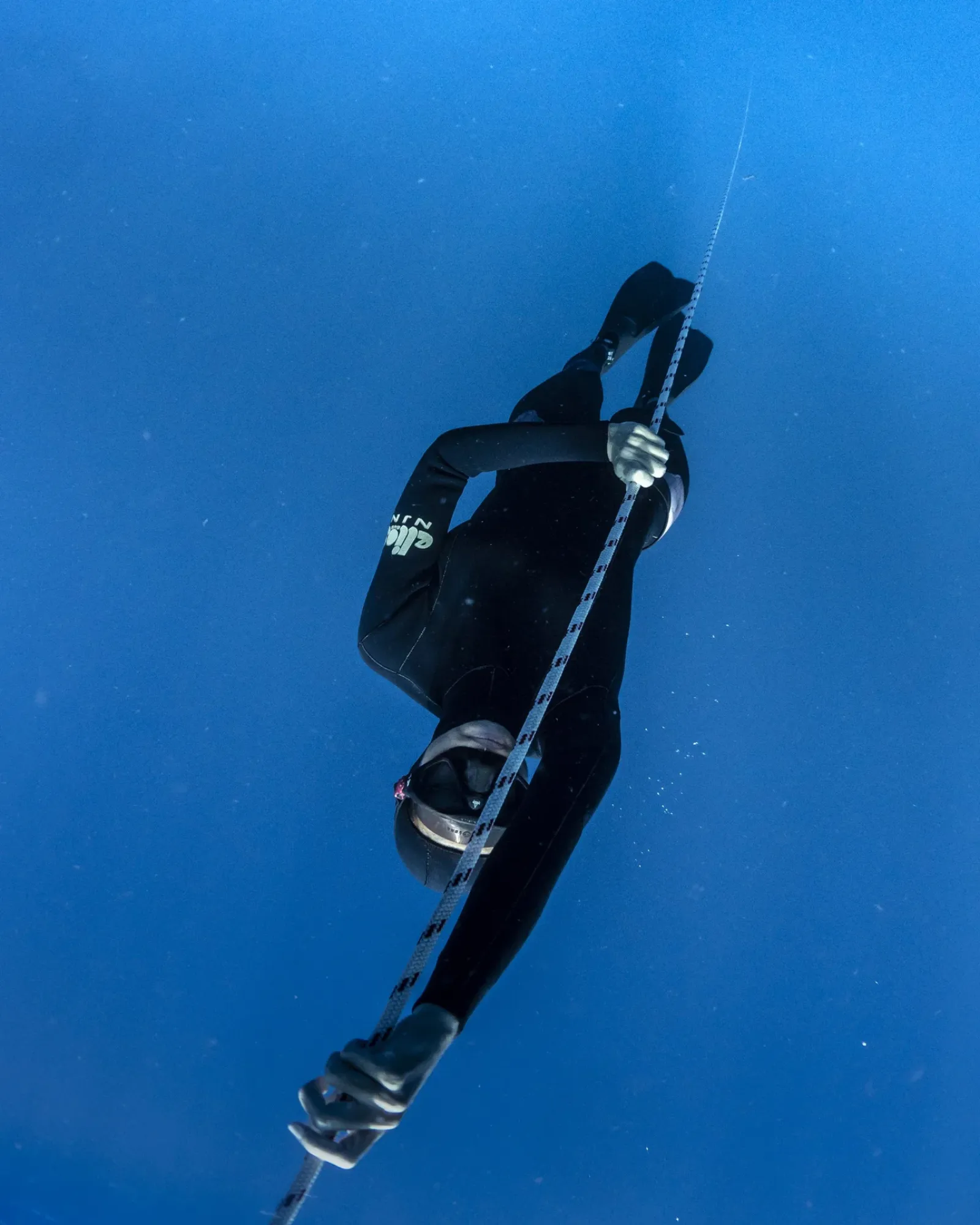
Freedivers training on the line in Koh Tao

Choose your pathway

Apnea Total vs Molchanovs

Two internationally recognised systems, taught side by side at Orenda. Here is how they compare, so you can choose the pathway that fits your goals.

Two systems, one shared foundation

The real question is not which system is best, but which kind of learning you want. Both teach the same core skills: relaxation, breathing, equalization, finning technique, and rescue. Both put safety first and progress you gradually, and both are respected at freediving centres around the world. You are not choosing between good and bad. You are choosing a style of learning.

Molchanovs

The Wave progression

Structured Waves

More structured, built around clear steps called Waves. Each level has performance requirements for depth, static and dynamic, and Dynamic No Fins is included from the very first level. Every course comes with access to the Molchanovs online training platform, so you keep learning long after your time on the island.

  • Wave 1 is your foundation: 3 days, 10,900 THB (~288 €).
  • Wave 2 takes you to 24 to 30 m with deeper relaxation and freefall: 4 days, 14,900 THB (~393 €).
  • Wave 3 moves toward a semi-professional level with mouthfill equalization and FRC diving: 6 to 7 days, 18,900 THB (~499 €).
  • Dynamic No Fins from the very first level, plus access to the Molchanovs online training platform.

Apnea Total

Clear, focused levels

Targets, not tests

Super relaxed and flexible, with no performance exams. The focus is on comfort, fun and your personal goals, so you can explore freediving at your own pace. Clearly defined levels take you from beginner to instructor, and it is quick to get started.

  • Freediver Level 1 is a 2-day certification to 20 m: 7,500 THB (~198 €).
  • Advanced Level 2 takes you to 30 m: 3 days, 10,900 THB (~288 €).
  • A dedicated Static Apnea Clinic focuses on breath-hold work: 1 day, 3,000 THB (~79 €).
  • The performance numbers are targets to aim for, not pass or fail. You progress at your own pace.

Side by side

Aspect Molchanovs Apnea Total
Structure Wave 1 to Wave 3 and beyond, a continuous progression. Distinct levels from Freediver Level 1 to Instructor.
Philosophy Technique, gradual progression, strong community and study material. Clear milestones, efficient and well defined at each level.
The numbers Performance requirements you meet to certify each Wave. Targets to aim for, not pass or fail. You progress at your own pace.
Best for Divers who see freediving as a long journey and enjoy structure. Divers who want a focused, efficient path and quick milestones.
Getting started Wave 1 over 3 days builds deep foundations. Level 1 over 2 days is a fast route to certification and 20 m.
Going deep Wave 3 and the Master path reach advanced depths. Advanced Level 2 and the Master path reach advanced depths.
Crossovers Crossovers available for certified divers. Crossovers available for certified divers.

Level by level, what each system asks of you

This is where the two systems feel most different. In Apnea Total the depth and breath-hold figures are targets you work toward. In Molchanovs they are requirements you meet to certify each Wave. Safety and rescue skills are required in both. A quick key to the abbreviations is below.

Abbreviation key

STA
Static apnea: a relaxed breath-hold with your face in the water.
DYN
Dynamic apnea: horizontal distance on a single breath. DYNB is with bifins, DYNM with a monofin.
DNF
Dynamic No Fins: horizontal distance with no fins, using a breaststroke-style pull.
CWT
Constant Weight: diving down and back up under your own power. CWTB is with bifins.
CNF
Constant Weight No Fins: reaching depth with no fins at all.
FIM
Free Immersion: pulling yourself down and up the rope, no fins.
Rescue
Bringing a diver who has blacked out safely back to the surface.

Apnea Total: your targets at each level

Targets

Numbers to aim for, not pass or fail. Rescue skills are the exception and are always required.

Level Target depth Target static Rescue Focus
Beginner Freediver 12 to 20 m (FIM and CWT) Not assessed 6 to 10 m No exams. Relaxed focus on safety and comfort.
Advanced Freediver 25 to 30 m (exhale dives to 22 m, full-lung to 30 to 35 m) Around 3:00 or more - Dynamic apnea optional.
Master Freediver 35 to 40 m and beyond (individual progression) 4:00 or more, often much more with training 20 to 25 m Daily workshops, assisting instructors, stamina test, CNF, Monofin and DNF.

Molchanovs: the requirements for each Wave

Requirements

Meet these in the pool and in open water to certify and move up. Dynamic No Fins is taught from Wave 1.

Wave Pool Open water
Wave 1 (Beginner)
  • Static (STA): about 1:30
  • Dynamic bifins (DYNB): 30 m
  • No fins (DNF): technique only, not a requirement yet
  • Depth, bifins and Free Immersion (CWTB and FIM): 12 to 20 m
  • Rescue and buddy skills (CWTB): 6 to 10 m
Wave 2 (Intermediate)
  • Static (STA): about 2:30
  • Dynamic bifins (DYNB): 50 m
  • No fins (DNF): 35 m
  • Monofin (DYNM): technique introduced
  • Depth, bifins and Free Immersion (CWTB and FIM): 24 to 30 m
  • No fins depth (CNF): 15 m
  • Buddy and rescue (CWTB): 10 to 15 m
Wave 3 (Advanced)
  • Static (STA): 3:30 or more
  • Dynamic bifins (DYNB): 75 m
  • No fins (DNF): 50 m
  • Depth, bifins and Free Immersion (CWTB and FIM): 34 to 40 m
  • No fins depth (CNF): 25 m
  • Buddying: 20 m
  • Rescue: 20 m
  • Surface tow: 20 m

Which one is right for you?

Total beginner

Either works. Start with a Discover session if you are unsure, then choose Level 1 or Wave 1 in whichever system appeals to you.

Depth-focused

Both take you deep. Molchanovs Wave 3 and the Apnea Total Master path both reach advanced depths.

Future instructor

Both offer instructor courses. We also run crossovers if you are already certified with another agency and want to add a system.

Crossovers between systems are available for certified divers, so your choice today does not lock you in forever.

Common questions

What is the difference between Apnea Total and Molchanovs?

Both are excellent, internationally recognised systems that teach the same core skills. Apnea Total is more relaxed with no performance exams, where the numbers are targets you aim for. Molchanovs uses a structured Wave progression with clear performance requirements and an online training platform. The right choice comes down to the learning style you prefer.

Which system should a complete beginner choose?

Either works well. If you are unsure, start with a Discover session, then choose Level 1 or Wave 1 in whichever system appeals to you. We are happy to help you decide before you book.

Are the depth and breath-hold numbers requirements or targets?

In Apnea Total the performance numbers are targets to aim for, not pass or fail, and you progress at your own pace. In Molchanovs they are requirements you meet to certify each Wave. Safety and rescue skills are required in both systems.

Can I switch between the two systems later?

Yes. Crossovers are available for certified divers, so your choice today does not lock you in. If you are already certified with another agency, we can add a system through a crossover.

Which is better for going deep or becoming an instructor?

Both reach advanced depths, through Molchanovs Wave 3 and the Apnea Total Master path, and both offer instructor courses. Tell us your goals and we will point you to the pathway that fits.

Still not sure? Ask us

The best way to choose is to tell us your goals, your experience, and how much time you have. We will point you to the pathway that fits, with no pressure, before you book.

Want the long read? Read the full guide

Book your spot